
Our Story
-
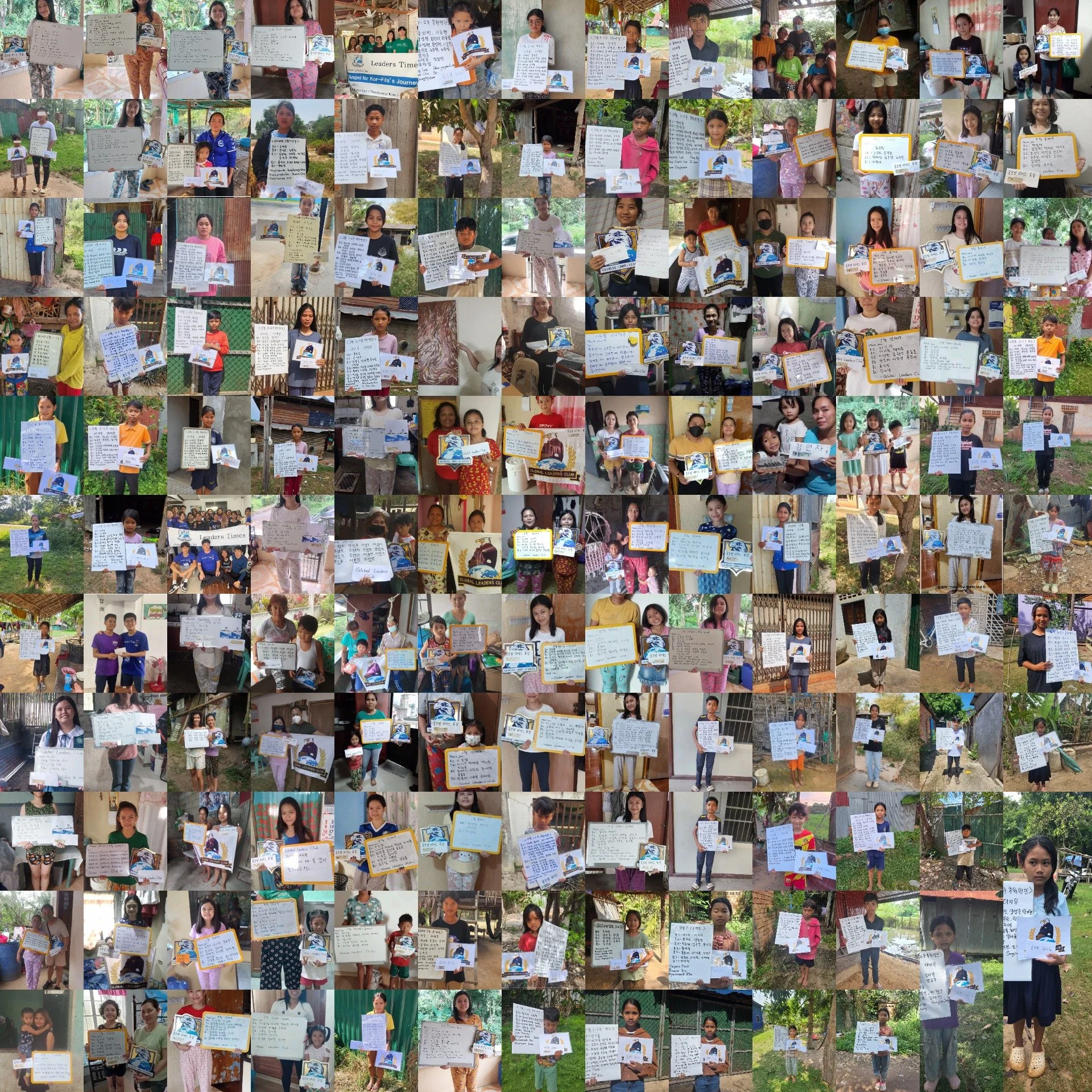
Angels for the Journey began with a report. As a Leaders Times youth journalist in high school, I returned to the Philippines, where I had spent part of my childhood, to document the lives of Korean-Filipino (“Kor-Fil”) children. I visited homes, churches, and schools in mostly rural areas, especially in the Cavite region. I met students who could communicate between Tagalog and English but who had no clear path in life. Some lived with grandparents or relatives. Others lived with single mothers balancing unstable jobs and rising living costs. Several teenagers had attended school inconsistently since tuition, transport, and other learning-related costs became impossible.
I stayed in touch with the community through friends, local volunteers, pastors, and teachers. Messages continued to arrive: a child blocked from reenrolling because of unpaid fees, a family where both parents suddenly lost work, and a student missing more classes and showing signs of malnourishment. The central question changed from “How do I tell this story well?” to “How do we accompany these youths in their education journey, step by step, year by year?”
At the same time, I saw how many charity efforts worked: a group would visit once a year, hand out gifts, take photos, and leave. Another team might fund a one-time event, but there was no guarantee anyone would still be there when the next school term began or when disaster, like the Taal eruption, hit. Angels for the Journey (previously named Angels for the Kor-Fils’s Journey) was created to be different: a youth-driven initiative focused on regular support, contact, and long-term relationships. Youths empowering each other.
We also started with clear limits in mind. We knew we could not fix structural inequality or replace public systems. What we could do was more modest and concrete: be a trustworthy presence and follow the same children and families over several school years.
-
Since 2021, Angels for the Journey has:
Delivered 193 student supports (tuition and educational resources) between 2021 and October 1, 2026
Inspired Filipino and Cambodian students to consider the possibility of attending an American university and aided them throughout the application process.
For example, in 2025, Chanra Hun (from Kok Trach Village, Siem Reap, Cambodia) received admission and scholarship from Reed College in Portland, Oregon.
Helped children complete full school years that likely would have been cut short without support for tuition, exam fees, uniforms, or supplies
Provided targeted emergency assistance during job loss, illness, or sudden crisis so families did not have to pull children out of school
Given local coordinators a small, flexible resource they can draw on in urgent cases instead of watching problems unfold with no backup
Offered many high school students their first long-term experience in cross-cultural work, beyond one-week “voluntourism”
Allowed many youth volunteers to engage deeply and continuously with questions of inequality and youth education, shaping how they now think about future studies and careers
-
As Angels for the Journey grew, we also began asking how older youth, especially Korean-Filipino students familar with the English language, could access longer-term educational opportunities abroad. This led to conversations with organizations connected to CSIET-listed J-1 exchange programs, including a Febuary 29, 2024 meeting with the Executive Director of CETUSA Kimberly Carter to explore whether high-school exchange scholarships or partial support might be possible for students in our network.
These discussions are still exploratory, but they reflect a broader vision: not only keeping children in school now, but also opening doors for some to study in other countries under safe, regulated programs, and then return with new skills and perspectives to their own communities.
-
From the beginning, Angels for the Journey was designed as a student network. We consist of:
Youth volunteers (mostly high school students in Korea and the U.S.)
Local coordinators (teachers, pastors, and trusted volunteers in the Philippines, with growing partners in Cambodia and Laos)
A small core team of directors that oversees communication, records, and funds: Minjung Lee, Alex Lee (formerly included co-founder Sangkyung Kim as well)
We agreed on three goals:
Provide consistent bi-weekly financial support for underprivileged children
Receive regular, specific updates from local coordinators
Build long-term relationships through repeated visits and ongoing communication focused on listening and learning, not a one-time event.
As trust deepened, our work expanded beyond the first community in the Philippines. Through connections in Cambodia and Laos, often overlapping with the Lumen Education Program libraries, we began supporting students and families there as well. Today, our network includes youth volunteers, local leaders, and families in the Philippines, Cambodia, and Laos, connected by the belief that education should not stop because of poverty or crisis.
-
We do not choose students from afar. All decisions flow through local volunteers who are already serving in the communities:
Local teachers who see which students are missing class or at risk of dropping out
Missionary pastors and church workers who regularly visit homes and identify food, health, and school needs
Regional volunteers who know families personally and can follow up over time
They alert us when a child cannot pay fees, lacks a uniform, or faces a crisis that threatens their schooling. We review the situation, agree on a specific type and amount of support, and deliver the support to our local representatives, who pay schools directly, buy items, or sometimes assemble necessary food and/or hygiene packages. They, then, send receipts and photos (with consent) so we can confirm that the support reached the child. Our role is to listen, respond transparently, and maintain careful records so that we can hopefully see improvement in the educational gap over time.